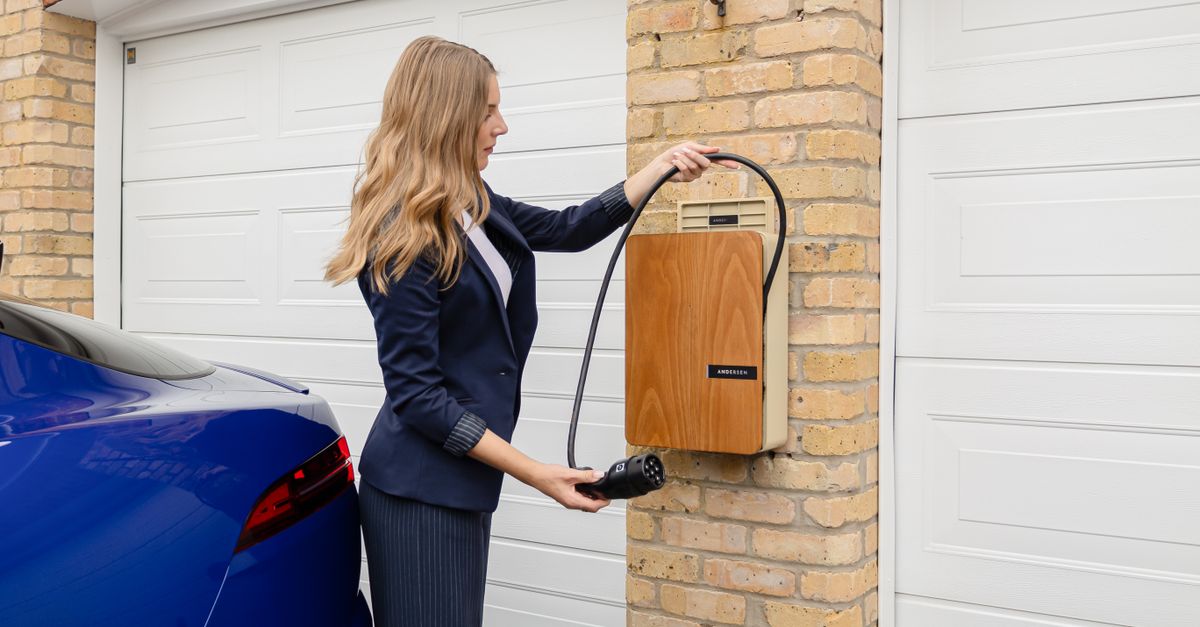
When I first bought my electric vehicle, I was excited about the prospect of ‘smart’ home charging. The idea of plugging in my car at night and letting my smart charger figure out the cheapest time to charge, based on my utility’s fluctuating rates, sounded like a dream. I envisioned significant savings, an optimized battery, and a seamless experience. What I actually got was a confusing mess of apps, unexpected higher bills, and a car that sometimes wasn’t fully charged when I needed it most.
Like many EV owners, I quickly learned that the promise of ‘smart’ charging often falls short of reality. The marketing focuses on savings and convenience, but the hidden complexities and overlooked factors can turn a seemingly good idea into a costly headache. In my experience, relying solely on a smart charger’s default settings or a single utility integration often leads to more frustration than financial benefit. The mistake I see most often is blindly trusting the tech without understanding the underlying energy dynamics and how they interact with your specific needs.
My journey from hopeful smart charger user to a more strategic, hands-on approach revealed that true savings and optimal battery health come from a deeper understanding of your energy consumption, utility plan, and daily driving habits. It’s not just about the charger; it’s about the ecosystem you create around it.
Key Takeaways
- Generic ‘smart’ charging often leads to higher bills or undercharged EVs due to misaligned utility plans and driving habits.
- True savings come from understanding your utility’s specific time-of-use (TOU) rates and matching them with your actual charging needs.
- Over-reliance on a single app or integration can create ‘blind spots’ that miss crucial data for optimization.
- Manual oversight and strategic scheduling, even with smart tech, are essential to avoid hidden costs and maximize benefits.
The Illusion of Universal Savings from ‘Smart’ Scheduling
Many smart EV chargers and their accompanying apps boast algorithms that promise to find the absolute cheapest time to charge your vehicle. This sounds fantastic in theory, especially for those of us with time-of-use (TOU) electricity plans where rates can vary wildly throughout the day. I imagined my charger effortlessly shifting its schedule to the lowest-cost overnight hours, saving me bundles.
However, this universal ‘set it and forget it’ approach often backfires. The primary reason is that these algorithms are frequently built on generalized assumptions or limited data. My first smart charger, for example, optimized purely for the lowest-cost period, which was typically between 2 AM and 5 AM. This was great for my wallet, if I only drove short distances the next day. But what about those days when I had an early morning commute or an unexpected errand that required a full charge by 7 AM?
The charger, in its pursuit of minimal cost, would sometimes leave my battery at 70-80% capacity, assuming I had more charging windows later. This led to range anxiety and forced me into inconvenient daytime charging during peak rate hours to top up. The supposed savings were nullified by the need for additional, expensive charging. It turns out, optimizing purely for cost without considering readiness is a recipe for frustration and, paradoxically, higher overall energy bills.
What changed everything for me was realizing that my charging schedule needed to be flexible and priority-driven, not just cost-driven. I started by categorizing my charging needs: daily commute (needs 90% by 7 AM), weekend long trip (needs 100% by 8 AM Saturday), or flexible (can charge anytime). Many smart chargers lack this nuanced prioritization, forcing you into a rigid model that doesn’t fit real life. The ‘smart’ scheduling was making me less smart about my own energy use.
The Overlooked Costs of Incompatible Utility Integrations
Another major pitfall I encountered was the promise of seamless integration with my utility provider. My smart charger brand claimed direct communication with my local energy company to pull real-time TOU rates and adjust accordingly. This sounded like the ultimate hands-off solution.
The reality was far from seamless. Different utility companies have wildly different TOU structures, demand charges, and even communication protocols. My utility had a complex tiered TOU plan, with super-off-peak, off-peak, mid-peak, and on-peak rates, plus a critical peak pricing (CPP) event option. The charger’s generic integration often failed to accurately parse these nuances.
For instance, the charger might correctly identify the super-off-peak window but fail to recognize a pre-scheduled critical peak pricing event that would temporarily spike rates even during what it considered an ‘off-peak’ time. I once received a shocking bill because my charger continued to charge during a four-hour CPP event, unaware that rates had surged from $0.10/kWh to over $1.00/kWh. The app showed ‘off-peak’ but my wallet screamed ‘on-peak.’ This kind of misalignment can quickly erode any perceived savings and add hidden costs.
Furthermore, some integrations are delayed. Your utility might change its rates for the next day at 6 PM, but your smart charger’s integration only updates every few hours, or even once a day. This lag can lead to your charger initiating a charge at a rate that’s no longer the cheapest. In my experience, relying on a third-party app to perfectly interpret my specific utility’s complex and dynamic pricing was a gamble that often didn’t pay off. A better approach is often to manually input and update your known TOU schedule into the charger’s settings or use a home energy management system that can directly pull utility data via an API, not just a generic integration.
The ‘Phantom Drain’ and Inefficient Charging Losses
When we talk about EV charging costs, we usually focus on the per-kilowatt-hour rate. But there’s a hidden cost that smart charging, ironically, can sometimes exacerbate: efficiency losses and phantom drain. Any electronic device plugged in draws some power, even when not actively working. Smart chargers, with their Wi-Fi connectivity, processors, and constant communication, have a baseline energy consumption.
While this ‘phantom load’ is usually small (a few watts), it adds up over 24/7 operation. A smart charger consuming 3-5 watts continuously will use 26-44 kWh per year. At an average of $0.15/kWh, that’s $4-$7 annually. Not a huge sum, but it’s pure waste, unlike the energy going into your car. And if you’re in a high-rate area, that waste increases.
More significantly, smart chargers often initiate and stop charging cycles based on their algorithms. Each time a charging session starts, there’s a period of lower efficiency as the car’s battery management system and the charger ramp up. Frequent, short charging bursts – which some smart algorithms might prefer to precisely hit low-cost windows – can lead to more of these inefficient ramp-up periods compared to one longer, continuous charge.
What I learned was the value of a ‘dumb’ charger that I control with a smart outlet or home energy manager. A basic Level 2 charger has minimal parasitic draw when idle. By connecting it to a Wi-Fi-enabled smart switch that I program based on my carefully monitored TOU rates and daily needs, I gain precise control. I can ensure a single, efficient charging session during the lowest-cost window, minimizing ramp-up losses and phantom drain. This hybrid approach — smart control over dumb hardware — often proves more efficient and cost-effective in the long run.
Over-reliance on Single App Ecosystems and Data Silos
Many smart EV chargers are designed to operate within their own proprietary app ecosystem. This is great for brand loyalty, but often terrible for holistic energy management. I found myself juggling multiple apps: one for my solar panels, another for my smart thermostat, and yet another for my EV charger. None of them truly talked to each other in a meaningful way to optimize my entire home’s energy consumption, especially around EV charging.
For example, my solar panels generate excess power during the day. A truly smart system would recognize this, know my EV is plugged in, and initiate charging during those hours to maximize self-consumption of free solar energy, even if those aren’t the absolute lowest grid rates. My charger’s app, however, was blind to my solar production. It only saw the grid rates and stuck to its pre-programmed overnight schedule, exporting my excess solar at a low compensation rate while still drawing expensive grid power later for my car.
This data silo problem creates missed opportunities for savings and efficiency. What actually works is moving beyond single-device apps to a more integrated home energy management system. Systems like Home Assistant, Enphase, or even certain smart hub platforms can aggregate data from solar inverters, smart meters, EV chargers, and other appliances. This allows for truly intelligent automation that charges the EV when solar is abundant, pre-cools the house when electricity is cheap, and prioritizes power to critical loads. It’s a more complex setup initially, but the long-term benefits in terms of savings and energy independence are significant. Until then, manually aligning schedules and being aware of your home’s total energy picture is crucial.
The Compromise on Battery Longevity from Aggressive Optimization
Finally, a hidden cost that’s often overlooked is the potential impact of overly aggressive charging optimization on your EV’s battery longevity. While most EV batteries are incredibly robust, extreme charging behaviors can contribute to faster degradation over many years.
Some smart charging algorithms, in their quest to hit the absolute lowest-cost energy windows, might prioritize rapid charging when rates are cheap, or frequently charge the battery to 100% or discharge it to very low levels before the next charge cycle. While modern EVs have sophisticated battery management systems (BMS) to mitigate damage, consistently pushing these boundaries isn’t ideal.
Rapid charging (Level 3 DC fast charging) is generally harder on the battery than slower Level 2 AC charging. While home Level 2 charging is usually fine, if your smart charger frequently attempts to ‘burst’ charge to quickly reach a target state of charge during a brief off-peak window, it might not be as gentle on the battery as a slower, consistent charge over several hours. More importantly, frequently charging to 100% (especially if the car then sits for extended periods at that level) or letting the battery drop consistently below 20% before recharging can put stress on the cells.
What I’ve learned is that a balanced approach is key. I aim to keep my EV’s state of charge between 20% and 80-90% for daily driving, only charging to 100% before long trips. My smart charging strategy now prioritizes this battery health principle, even if it means sacrificing a tiny bit of potential monetary savings. By manually setting charge limits and ensuring charging occurs gradually during the off-peak window I define, rather than letting an opaque algorithm decide, I feel much more confident about preserving my battery’s long-term health and value. The hidden cost of a prematurely degraded battery far outweighs any short-term electricity savings.
Frequently Asked Questions
Q: Is it always cheaper to charge my EV at home compared to public chargers?
A: Generally, yes, home charging is significantly cheaper. Public fast chargers (Level 3) can sometimes be as expensive or even more expensive per kWh than gasoline, especially at peak times. Public Level 2 chargers are usually cheaper than fast chargers but still typically more expensive than home electricity rates. However, with dynamic home utility rates, if you charge at home during peak hours, it can occasionally be comparable to some public options, so always check your utility’s time-of-use plan.
Q: Should I unplug my EV charger when not in use to avoid phantom drain?
A: While smart EV chargers do have a small phantom drain (typically a few watts), the energy consumption is usually minor, costing only a few dollars per year. For convenience, most people leave them plugged in. If you’re highly sensitive to energy waste, using a smart outlet to completely cut power to a ‘dumb’ Level 2 charger when not actively charging can eliminate this, but for smart chargers that rely on constant connectivity, unplugging isn’t always practical.
Q: Does charging my EV to 100% every night damage the battery?
A: Modern EVs have sophisticated Battery Management Systems (BMS) to protect against damage, even when charging to 100%. However, most manufacturers and battery experts recommend keeping your daily charge limit between 80-90% for optimal long-term battery health. Only charge to 100% when you need the full range for a trip, and ideally, depart soon after it reaches 100% rather than letting it sit fully charged for extended periods.
Q: My smart charger isn’t saving me money. What’s the first thing I should check?
A: The first thing to check is your utility’s specific time-of-use (TOU) rates. Ensure that your smart charger’s settings accurately reflect these rates, especially the off-peak windows. Many chargers come with generic settings or imperfect utility integrations. Manually inputting your exact TOU schedule into the charger’s app, and double-checking that it’s adhering to it, is a crucial first step. Also, consider if your charging habits are aligning with the charger’s optimization goals (e.g., if it prioritizes lowest cost over immediate readiness).
Q: Can I use my solar panels to exclusively charge my EV at home?
A: Yes, this is an excellent strategy to maximize savings and environmental benefits. However, a generic smart EV charger app might not ‘see’ your solar production. You’ll need a home energy management system (HEMS) or a smart inverter that integrates with your EV charger to prioritize charging during periods of high solar generation. Many solar companies offer apps that can prioritize EV charging when there’s excess solar, but it requires specific system integration to work effectively.
Conclusion: Taking Control of Your ‘Smart’ Charging
While the promise of ‘smart’ home EV charging is compelling, the reality is that true optimization requires more than just plugging in and hoping for the best. The hidden costs and inefficiencies often arise from generic algorithms, incomplete utility integrations, energy waste, and fragmented data. My journey through these frustrations led me to a simple truth: the smartest part of your home charging setup should always be you.
By understanding your utility plan’s nuances, prioritizing your charging needs, being mindful of efficiency, and seeking more integrated energy management solutions, you can transform your EV charging from a potential money pit into a genuinely cost-effective and environmentally friendly practice. Don’t let the ‘smart’ tech make you complacent; arm yourself with knowledge and take proactive control to truly reap the benefits of owning an EV.