When I first moved into my 1970s split-level, I thought I was being smart about energy. I diligently turned the thermostat down to 68°F in winter and up to 75°F in summer. I even manually adjusted it when I left for work, convinced I was saving a bundle. Then came the first winter electric bill: a staggering $400. My ‘smart’ strategy was clearly failing. I felt like I was doing everything right, but the numbers told a different story. It was frustrating, expensive, and a huge wake-up call that my assumptions about thermostat settings were fundamentally flawed. This is a common trap, and in my experience, most homeowners fall into it.
After countless hours of research, consulting energy auditors, and experimenting in my own home, I uncovered the critical mistakes many of us make. It turns out, how you interact with your thermostat, the type of thermostat you have, and even the common advice you hear can be costing you hundreds, if not thousands, each year. This isn’t about setting it to an uncomfortable temperature; it’s about understanding the science of home heating and cooling, and leveraging it to your advantage.
I realized that my biggest mistake wasn’t just the temperatures I chose, but the way I was thinking about my home’s energy consumption. My house wasn’t a static box; it was a dynamic system interacting with the outside world, and my thermostat was merely one control point. This article isn’t just going to tell you to change a number; it’s going to explain why your current approach is likely costing you money and, more importantly, what actually works for lasting, tangible savings without sacrificing comfort.
Key Takeaways
- Constantly adjusting your thermostat or making large temperature swings often wastes more energy than it saves due to system inefficiency.
- Manual ‘set it and forget it’ strategies overlook your home’s thermal mass and external factors, leading to suboptimal performance.
- Leveraging setback temperatures with a smart or programmable thermostat, customized to your schedule, is crucial for real savings.
- Understanding your home’s ‘thermal recovery rate’ allows for strategic temperature adjustments that maximize efficiency without discomfort.
The Costly Myth of Constant Manual Adjustment (Why Your Finger is Your Foe)
One of the most ingrained habits I had was constantly adjusting the thermostat. Leaving for work? Drop it five degrees. Coming home? Crank it back up. Going to bed? Drop it again. This felt proactive, like I was doing something to save energy. In reality, it was often counterproductive, and it’s a mistake I see most often. The myth is that every degree you lower or raise saves energy proportionally.
The truth is, your HVAC system is most efficient when it operates in steady, consistent cycles. When you make a dramatic temperature change, say from 60°F to 70°F, your furnace has to work much harder and longer, often at peak capacity, to bridge that large gap. This ‘recovery period’ is where a significant amount of energy is expended. It’s like flooring the gas pedal in your car after slamming on the brakes – it uses more fuel than maintaining a steady speed. For air conditioning, it’s the same principle: letting your home get excessively hot means the AC has to run aggressively to catch up, leading to higher energy use and increased wear and tear on your unit.
In my own home, I documented my energy use during a week of manual adjustments versus a week with a consistent, programmed schedule. The manual adjustment week, despite my best intentions, consistently showed 10-15% higher energy consumption. Why? Because the system was constantly cycling hard to meet large temperature demands, rather than gently maintaining a smaller differential. I learned that small, incremental changes are far more efficient than large, sudden swings. A one-degree difference maintained over hours is less impactful than a ten-degree swing for an hour.
Why ‘Set It and Forget It’ Fails Most People (The Thermal Mass Misconception)
Another common piece of advice, especially from those who swear by simplicity, is to ‘set it and forget it.’ The idea is that maintaining a single comfortable temperature all day and night is the most efficient because your system doesn’t have to work as hard to recover. While it has some merit in preventing drastic recovery periods, it falls short by ignoring one crucial factor: your home’s thermal mass and the natural temperature fluctuations that occur.
Your home is not a perfectly insulated box. Heat constantly transfers in and out through walls, windows, and the roof. Even if you set your thermostat to a constant 70°F, your furnace or AC will still need to run to counteract this heat transfer. The ‘set it and forget it’ strategy fails because it runs your HVAC system during periods when you don’t actually need that specific temperature, like when you’re at work, asleep, or away from home.
For example, if you leave your thermostat at 70°F all day while you’re at work, your home is being maintained at that temperature even though no one is there to enjoy it. During that time, the differential between the indoor and outdoor temperature is often significant, meaning your system is constantly working against nature. What changed everything for me was understanding that maintaining any temperature when you’re not present is an unnecessary expense. The goal isn’t just to keep your home at a specific temperature, but to keep you comfortable at that temperature, and those two aren’t always aligned.
The Power of Strategic Setbacks (Your Smart Thermostat’s Secret Weapon)
The real secret to significant energy savings lies in strategic setbacks, which is where a smart or programmable thermostat truly shines. This isn’t about setting your home to an uncomfortable temperature; it’s about aligning your comfort needs with your daily schedule. The Department of Energy recommends setting your thermostat back 7-10°F from your desired temperature for 8 hours a day to save up to 10% on heating and cooling costs. In my experience, these numbers are conservative; I often saw more.
Here’s how it works: Instead of turning your heat down to 60°F every morning and then cranking it up to 70°F when you get home (and facing that expensive recovery period), you program your thermostat. For instance, in winter, I set my thermostat to 62°F from 9 AM to 4:30 PM (when I’m usually out). Then, I program it to begin heating up to 68°F about 30-45 minutes before I typically arrive home. This pre-heating or pre-cooling strategy means your system starts working to reach your comfort zone gradually, avoiding the sharp energy spike of a massive temperature jump. The key is to start the recovery before you need the comfort.
My smart thermostat even learned my home’s thermal dynamics over time, predicting how long it would take to reach my desired temperature and adjusting the start time accordingly. This eliminated the guesswork. By strategically timing these setbacks and recovery periods, my furnace and AC ran for shorter, more efficient bursts, leading to noticeably lower bills. This isn’t just setting a lower temperature; it’s about optimizing the timing of those temperature changes.
Calculating Your Home’s ‘Thermal Recovery Rate’ (The Missing Piece for Optimal Timing)
One of the most eye-opening discoveries for me was understanding my home’s ‘thermal recovery rate.’ This is simply how long it takes your home to heat up or cool down by a certain number of degrees. Without knowing this, programming a thermostat is largely guesswork, leading to either discomfort or wasted energy.
Here’s how I figured mine out: I picked a day when I was home and the outdoor temperature was relatively stable. In winter, I set my heat back to 60°F for a few hours. Then, I manually bumped it up to 68°F and timed how long it took for the indoor temperature to rise by each degree. For my moderately insulated 1970s home, it took roughly 8-10 minutes per degree Fahrenheit. This meant if I wanted my home to be 68°F by 5 PM, and it was currently 60°F, I needed to start the heating cycle around 3:40 PM (8 degrees x 10 minutes/degree = 80 minutes, or 1 hour 20 minutes before 5 PM).
This simple experiment changed everything. Instead of guessing, I now had concrete data. This allowed me to fine-tune my programmable thermostat settings with incredible precision. For summer, I did the same with cooling. Knowing your home’s recovery rate allows you to implement setbacks of 7-10°F and have your home comfortably reach your desired temperature just as you walk in the door, without excessive energy expenditure. It prevents the system from running unnecessarily for hours before you arrive, but also avoids the ‘blast furnace’ effect of trying to heat a cold house too quickly.
Leveraging ‘Away’ Modes and Geofencing (The Ultimate Automation for Savings)
While programmed setbacks are powerful, modern smart thermostats offer an even more sophisticated layer of savings: ‘away’ modes and geofencing. This is what truly changed everything for me, turning my thermostat from a scheduled device into an intelligent, responsive system.
An ‘away’ mode automatically shifts your thermostat to an energy-saving setback temperature when it detects no one is home. Some thermostats use motion sensors, while others (especially those integrated with smart home systems) can tell if your phone leaves a defined ‘geofence’ around your home. For example, my ecobee thermostat automatically switches to a 60°F heating or 80°F cooling setting when it detects I’ve left a 5-mile radius around my house. This means if I decide to spontaneously go out for the evening, or if my schedule changes, my thermostat adapts without me having to remember to adjust it.
Conversely, when I re-enter the geofence, it begins the recovery process to bring my home back to my desired comfort temperature, factoring in the thermal recovery rate it has learned. This eliminates the ‘forgetting to turn it down’ problem, which, let’s be honest, is a major culprit for wasted energy. The savings here are not just from the setback itself, but from the consistency and reliability of having it always happen when you leave unexpectedly. This level of automation means your thermostat is working intelligently to save you money in the background, without requiring constant manual intervention or adherence to a rigid schedule.
Beyond Temperature: Fan Settings and Humidity Control (The Unsung Heroes of Comfort and Efficiency)
Many people focus solely on the temperature displayed on their thermostat, completely overlooking other critical settings that impact both comfort and efficiency. This is a subtle but significant mistake that can undermine all your other efforts.
Fan Settings: Most thermostats have AUTO and ON settings for the fan. Leaving your fan on ON constantly circulates air, which feels nice, but it’s a huge energy drain. It also recirculates any unfiltered air, potentially spreading dust and allergens. The AUTO setting, on the other hand, only runs the fan when your heating or cooling system is actively operating. This is almost always the most energy-efficient choice. I recommend using AUTO unless you have a specific reason (like improving air circulation for a short period after cooking) to use ON.
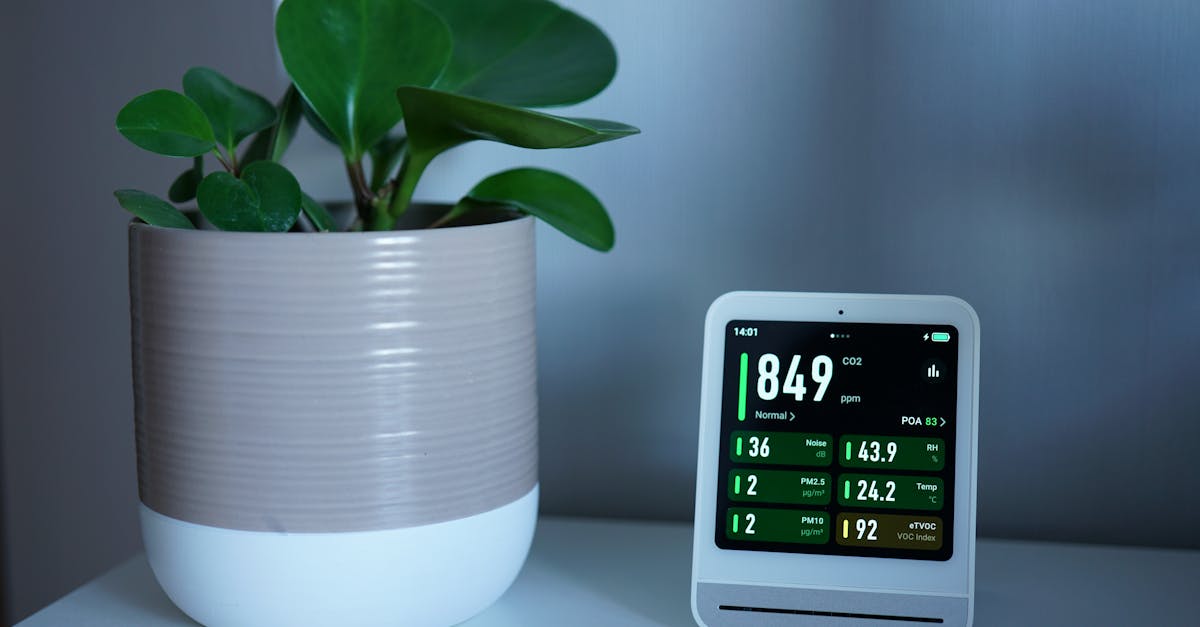
Humidity Control: In both heating and cooling, humidity plays a massive role in perceived comfort. In summer, high humidity makes 75°F feel much hotter. In winter, overly dry air can make 68°F feel colder. Many modern thermostats, especially smart ones, have built-in humidity sensors and can integrate with whole-home humidifiers or dehumidifiers. If your thermostat has an Econ or Dry mode, use it. This often means the AC will run a bit longer at lower speeds, specifically to remove more moisture, making your home feel cooler even at a higher temperature setting. Conversely, adding a little humidity in winter (if your system supports it) can make a lower temperature feel more comfortable, allowing you to save on heating.
By taking a holistic approach and not just fixating on the temperature number, you can significantly enhance your comfort while simultaneously driving down energy consumption. These often-ignored settings are the unsung heroes of a truly efficient home environment.
Frequently Asked Questions
Q1: Is it better to leave my thermostat at one temperature or set it back when I’m away?
A1: It is almost always more energy-efficient to set your thermostat back when you are away or asleep. A setback of 7-10°F for 8 hours a day can save you 10% or more on your energy bills. This reduces the energy needed to maintain a comfortable temperature when no one is there to benefit from it.
Q2: How much money can I really save by optimizing my thermostat settings?
A2: Savings vary based on your climate, home insulation, HVAC efficiency, and current habits, but the Department of Energy suggests savings of up to 10% by using strategic setbacks. In my experience, for homes with poor initial optimization, savings can easily reach 15-20% or more annually, translating to hundreds of dollars.
Q3: How far should I set back my thermostat temperature?
A3: A recommended setback is 7-10°F from your desired comfort temperature. For example, if you prefer 70°F during the day, set it to 60-63°F while you’re at work or sleeping. This range provides significant savings without requiring your HVAC system to work excessively hard to recover.
Q4: Should I use the ‘Auto’ or ‘On’ fan setting on my thermostat?
A4: For maximum energy efficiency, always use the ‘Auto’ fan setting. This ensures the fan only runs when your heating or cooling system is actively conditioning the air. The ‘On’ setting keeps the fan running continuously, which uses more electricity and can recirculate unconditioned air.
Q5: How do smart thermostats save more energy than programmable ones?
A5: Smart thermostats offer advanced features like geofencing (adjusting based on your location), learning algorithms (adapting to your schedule and home’s thermal dynamics), and integration with external sensors (for occupancy detection). These features provide dynamic, real-time optimization beyond the fixed schedules of a basic programmable thermostat, leading to greater, more consistent savings.
My journey from a $400 electric bill to manageable energy costs wasn’t just about tweaking a dial; it was about truly understanding how my home interacted with its environment and how my HVAC system actually worked. The mistake I see most often is treating the thermostat as a simple on/off switch, rather than the sophisticated control center it can be. By embracing strategic setbacks, understanding your home’s thermal dynamics, and leveraging smart features, you can unlock substantial savings without sacrificing an ounce of comfort. Start by experimenting with your setback times and observe the changes in your energy bill. The numbers don’t lie, and smart thermostat settings are one of the simplest, most effective energy efficiency upgrades you can make.